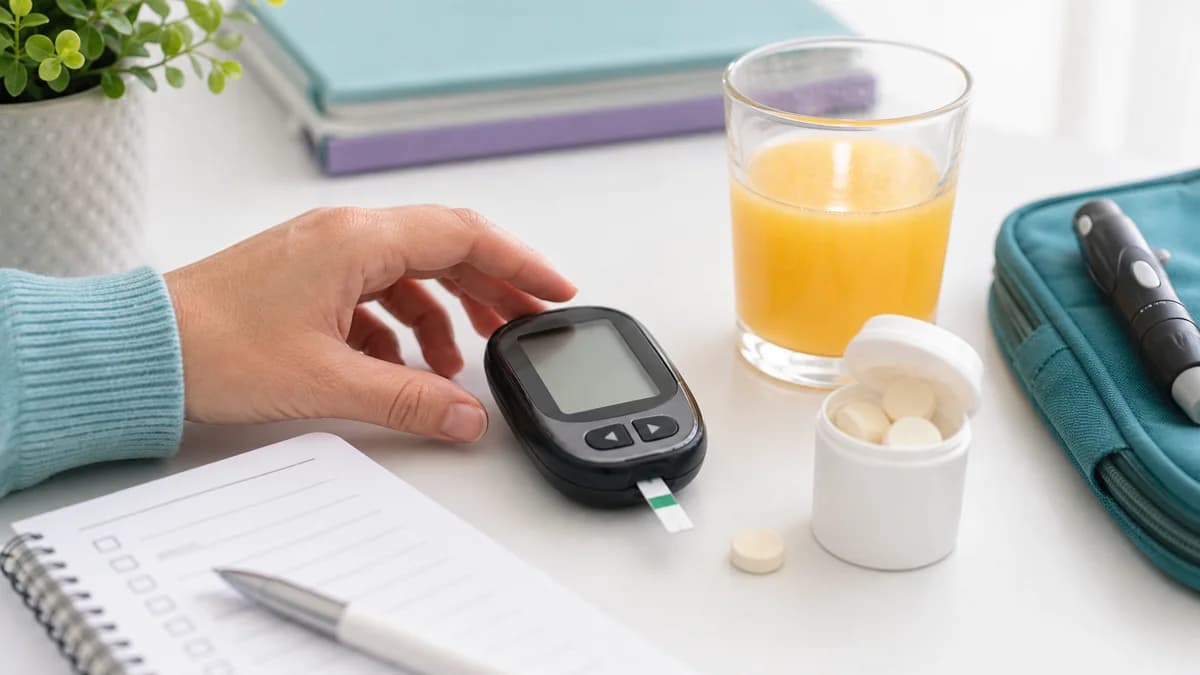
Hypoglycaemia means blood glucose is too low. It occurs more often in people with diabetes who use insulin or medicines that stimulate insulin release, but may have other causes too.
Common symptoms
Signs can appear suddenly and include shaking, sweating, intense hunger, palpitations, anxiety, weakness, headache, blurred vision, confusion or drowsiness. Severe symptoms, loss of consciousness or seizures are emergencies.
If you have diabetes, it is important to relate symptoms to a glucose measurement. Also see the article on fasting and after-meal glucose.
Why does glucose drop?
- you have taken too much insulin or changed treatment;
- you have skipped a meal or eaten fewer carbohydrates than usual;
- you have exercised more than usual;
- you have consumed alcohol;
- you have vomiting, diarrhoea or very low food intake.
If you have repeated episodes, do not adjust treatment on your own. Book a diabetes consultation to review your regimen, meals and monitoring.
What should you do immediately?
Medical sources recommend prompt treatment with fast-acting carbohydrates when glucose is low or symptoms are consistent with hypoglycaemia. The exact amount and steps need to be discussed with your doctor, especially if you use insulin.
After correction, it is important to understand why the episode happened: the meal, dose, exercise, alcohol, weight, infections or recent treatment changes.
When does it become dangerous?
Seek urgent medical help if the person is confused, cannot swallow, loses consciousness, has seizures or symptoms do not improve. Repeated episodes require reassessment, including HbA1c, home glucose readings and treatment.