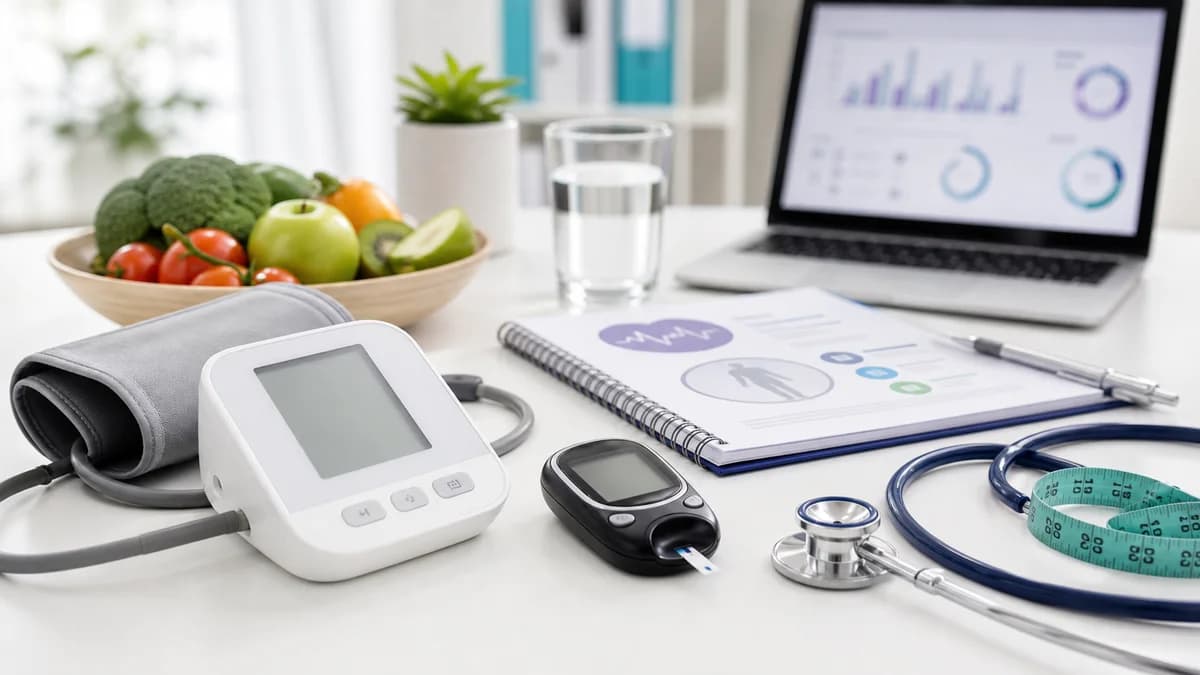
Blood pressure is one of the most important measurements in diabetes, obesity and metabolic syndrome. When high blood pressure accompanies abnormal glucose and lipids, cardiovascular risk rises.
Why does it matter in diabetes?
Diabetes can affect blood vessels, kidneys and the heart. Hypertension adds further pressure to the same organs. In someone with type 2 diabetes, blood pressure therefore needs regular monitoring, not just when symptoms appear.
How do you measure correctly?
- sit for 5 minutes before measuring;
- use a cuff that fits your arm;
- support your arm at heart level;
- do not measure immediately after coffee, exercise, smoking or intense stress;
- record the average of several measurements rather than just one isolated reading.
If your readings are repeatedly high, speak with your doctor. A single value can be affected by stress, pain, sleep or salt intake, but repeated high readings should not be ignored.
What can you change?
Weight loss, physical activity, reducing salt, limiting alcohol, sleep and glucose control can help. A Mediterranean-style diet and a plan with vegetables, protein, fibre and unsaturated fats can benefit several risk factors at once.
Which tests relate to blood pressure?
The doctor may monitor creatinine, eGFR, urine albumin-to-creatinine ratio, lipid profile, glucose and HbA1c. If you have several tests and do not know what they mean together, you can book test interpretation.