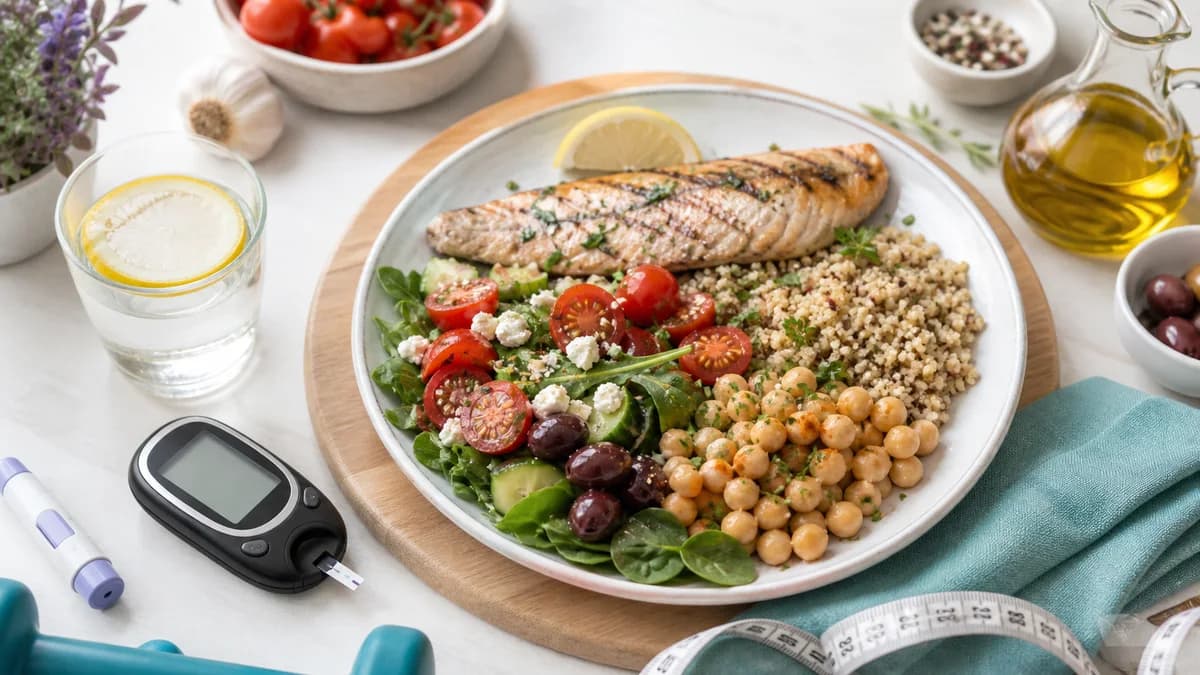
The Mediterranean diet is not a rigid list of foods, but an eating pattern based on vegetables, pulses, wholegrains, fish, olive oil, nuts, seeds and moderate portions of dairy or lean meat. With individual adjustments, it suits many people with type 2 diabetes, prediabetes or a weight-loss goal.
Why is it useful in diabetes?
The Mediterranean pattern emphasises fibre, unsaturated fats and minimally processed foods. These can help with fullness, glucose control, the lipid profile and cardiovascular risk. It does not mean “unlimited pasta”: it means choosing good-quality carbohydrates and appropriate portions.
A practical Mediterranean plate
- Half the plate: non-starchy vegetables – salad leaves, tomatoes, cucumbers, courgettes, peppers, broccoli and cauliflower.
- One quarter: protein – fish, chicken, eggs, Greek yoghurt, low-fat cheese, tofu or pulses.
- One quarter: a carbohydrate containing fibre – lentils, beans, chickpeas, quinoa, oats or genuinely wholegrain bread.
- Fats: olive oil, avocado, nuts or seeds, in measured quantities.
If you have diabetes and want specific menu examples, also read the diabetes nutrition plan.
Staple foods
- vegetables at every meal;
- pulses 3–5 times a week;
- fish, ideally 2 times a week;
- olive oil as the main fat;
- whole fruit rather than fruit juice;
- nuts and seeds in small portions;
- sweets and ultra-processed foods as rarely as possible.
Common mistakes
The first mistake is turning the Mediterranean diet into a diet high in white bread, pasta and excessive oil. The second is ignoring portions. Olive oil is healthy, but still contains many calories. Nuts are useful, but a small handful is different from a whole bag.
The third mistake is too little protein. For fullness and to maintain muscle during weight loss, protein needs to be planned, especially if you take treatment that reduces appetite.
The Mediterranean diet and weight loss
You can lose weight with this eating pattern if there is a calorie deficit and portions are adjusted. Its advantage is that fullness may make the deficit easier to sustain. If you are being treated with Wegovy or Mounjaro, diet remains important to avoid too little protein, constipation and excessive muscle loss.
When do you need a personalised plan?
If you have diabetes, kidney disease, fatty liver, dyslipidaemia, medication or episodes of hypoglycaemia, do not copy menus from the internet. A personalised nutrition plan can adapt the Mediterranean diet to your test results and goals.