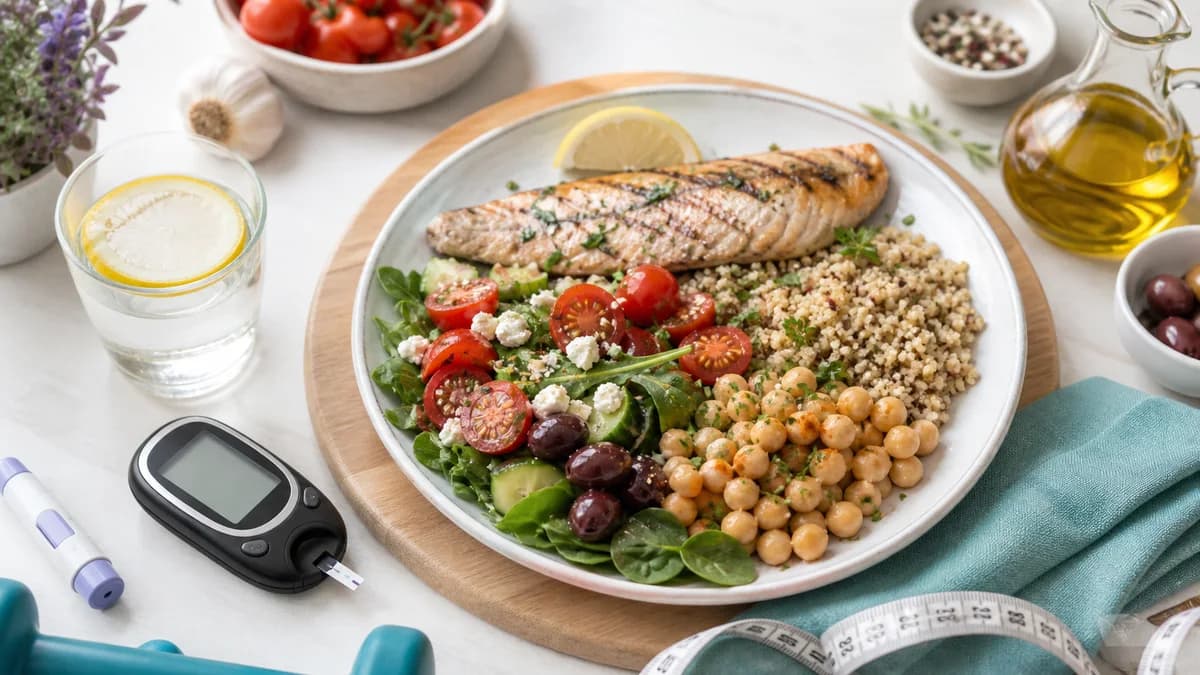
Why nutrition matters in diabetes
Nutrition is the cornerstone of type 2 diabetes management. What you eat directly affects glucose, body weight, blood pressure, cholesterol and complication risk. Clinical studies show that appropriate nutrition can:
- Reduce HbA1c by 1–2% – an effect comparable to a diabetes medicine
- Reduce the need for medication or insulin
- Help with weight loss, which improves insulin sensitivity
- Reduce the risk of cardiovascular complications
- Improve energy, mood and quality of life
There is no universal “diabetic diet”: an eating plan needs to be individualised according to weight, treatment, preferences and lifestyle. However, scientifically supported principles work for most people with diabetes.
A personalised nutrition plan developed by a specialist considers all these factors and provides a practical guide that is easy to follow in everyday life.
The glycaemic index: what it is and why it matters
The glycaemic index (GI) is a scale from 0 to 100 classifying foods by how quickly they raise blood glucose after consumption. Pure glucose has a GI of 100.
Classification
- Low GI (≤ 55) – glucose rises slowly and gradually: pulses, most vegetables, whole oats, barley, apples, pears, berries and nuts
- Medium GI (56–69) – glucose rises moderately: brown rice, wholegrain bread, sweet potatoes, pineapple and ripe bananas
- High GI (≥ 70) – glucose rises rapidly and sharply: white bread, white rice, boiled/fried potatoes, cornflakes, sugar and sugary drinks
Glycaemic load (GL)
A more useful concept than GI alone is glycaemic load, which also considers the amount of carbohydrate in the portion eaten:
GL = (GI × grams of carbohydrate in the portion) / 100
- Low GL: ≤ 10
- Medium GL: 11–19
- High GL: ≥ 20
For example, watermelon has a high GI (~72), but a normal portion has a low glycaemic load (~4) because it contains few carbohydrates. White rice, in contrast, has both a high GI and a high GL.
Practical tips for using GI
- Combine high-GI foods with protein, healthy fats or fibre: this reduces the meal's overall glucose response
- Eat vegetables and protein before carbohydrates: studies show a 20–30% reduction in postprandial glucose
- Prefer whole foods to refined ones
- Cooking and cooling starchy foods such as potatoes and rice increases resistant starch and reduces GI
Macronutrient balance
An effective diabetes nutrition plan considers the right balance of macronutrients:
Carbohydrates (40–45% of calories)
Carbohydrates have the greatest impact on glucose. Recommendations:
- Limit to 130–200 g of carbohydrate/day, individualised
- Distribute evenly throughout the day: 30–45 g per main meal, 15–20 g per snack
- Prefer complex carbohydrates (wholegrains, pulses and vegetables) to simple ones (sugar, juice and sweets)
- Increase fibre intake to at least 25–30 g/day
Protein (20–30% of calories)
- Include a protein source at each meal
- Protein slows carbohydrate digestion and stabilises glucose
- Recommended sources: fish, chicken, turkey, eggs, low-fat dairy, pulses and tofu
- As a guide: 1.0–1.2 g/kg of body weight/day, or 1.2–1.5 g/kg for people who exercise regularly
Fat (30–35% of calories)
- Prefer unsaturated fats: olive oil, avocado, nuts and oily fish
- Limit saturated fat to < 10% of calories
- Avoid trans fats completely: margarine and fried foods
- Omega-3 fats from oily fish, walnuts and flaxseeds have anti-inflammatory and cardiovascular protective effects
An example one-day nutrition plan
This example is a guide for an adult with type 2 diabetes and an energy requirement of approximately 1,800 kcal/day. Your individual plan may differ: consult a specialist for personalised recommendations.
Breakfast (7:30) – ~400 kcal, ~35 g carbohydrate
- 2 fried eggs cooked in 1 teaspoon of olive oil
- 1 slice of wholegrain rye bread with seeds
- ½ avocado, sliced
- Cherry tomatoes and sliced cucumber
- Black coffee or green tea without sugar
Why it works: the combination of protein from eggs, healthy fats from avocado and olive oil, and fibre from wholegrain bread and vegetables ensures a slow, steady rise in glucose.
Snack (10:30) – ~150 kcal, ~15 g carbohydrate
- 150 g plain, unsweetened 2% Greek yoghurt
- A handful of fresh blueberries (~80 g)
- 5 raw almonds
Lunch (13:00) – ~500 kcal, ~45 g carbohydrate
- 150 g grilled chicken breast
- A large salad: spinach, rocket, tomatoes, cucumber, red onion and olives
- Dressing: 1 tablespoon of extra virgin olive oil plus lemon juice
- 100 g cooked quinoa
- 1 large glass of water with a slice of lemon
Why it works: lean protein and quinoa, which has a low GI and is rich in fibre and protein, provide sustained energy. Raw vegetables add fibre and micronutrients.
Snack (16:00) – ~180 kcal, ~15 g carbohydrate
- 2 wholegrain crackers
- 2 tablespoons of hummus (chickpea spread)
- Carrot and celery sticks
Dinner (19:00) – ~450 kcal, ~35 g carbohydrate
- 150 g salmon baked with lemon and herbs (dill and tarragon)
- 200 g steamed broccoli and cauliflower, drizzled with 1 teaspoon of olive oil and garlic
- 80 g cooked brown rice
- A simple green salad with balsamic vinegar
Why it works: salmon provides anti-inflammatory omega-3 fats and complete protein. Cruciferous vegetables, broccoli and cauliflower, are rich in fibre and have a very low GI. Brown rice provides complex carbohydrates.
Optional evening snack (21:00) – ~120 kcal, ~10 g carbohydrate
- 1 slice of light telemea cheese
- 3–4 walnuts
- 2–3 cherry tomatoes
Approximate total: ~1,800 kcal | ~155 g carbohydrate | ~95 g protein | ~75 g fat | ~30 g fibre
Foods to include in a diabetes diet
- Leafy green vegetables: spinach, kale, lettuce and rocket – virtually no impact on glucose
- Cruciferous vegetables: broccoli, cauliflower and Brussels sprouts – rich in fibre and antioxidants
- Pulses: lentils, chickpeas and beans – excellent sources of plant protein and soluble fibre
- Oily fish: salmon, sardines, mackerel and herring – 2–3 times a week for omega-3 fats
- Nuts and seeds: almonds, walnuts, chia seeds and flaxseeds – healthy fats and fibre
- Berries: blueberries, raspberries, strawberries and blackberries – low GI and rich in antioxidants
- Extra virgin olive oil: the main fat for cooking and dressing
- Wholegrains: oats, barley, quinoa and buckwheat – in moderate amounts
- Cinnamon: studies suggest a modest glucose-lowering effect
- Apple cider vinegar: 1–2 diluted tablespoons before meals may reduce postprandial glucose
Foods to avoid or strictly limit
- Sugary drinks: fruit juice, fizzy drinks and energy drinks – the greatest “enemy” of glucose
- Sweets and cakes: milk chocolate, biscuits, cakes and ice cream – concentrated sugar
- White bread, white pasta and white rice: refined high-GI carbohydrates
- Sugary breakfast cereals: cornflakes and sweetened muesli – very high GI
- Chips and crisps: high GI plus unhealthy fats
- Processed meats: salami, sausages and bacon – associated with increased cardiovascular disease risk
- Excess alcohol: hypoglycaemia risk plus empty calories. A maximum of 1 glass of red wine a day for women and 2 for men, with a meal
- Dried fruit and sweet tropical fruit: raisins, dates, mango and very ripe bananas – high GI; consume in small amounts
The Mediterranean diet and diabetes
The Mediterranean diet is the most studied and recommended eating pattern for people with type 2 diabetes. Numerous large studies have demonstrated significant benefits:
- An HbA1c reduction of 0.3–0.5% compared with other diets
- A 30% reduction in cardiovascular events (PREDIMED study)
- Improved insulin sensitivity and reduced inflammation
- Reduced risk of depression, which is often associated with diabetes
- Sustainable long-term weight loss
Principles of the Mediterranean diet
- Extra virgin olive oil as the main source of fat
- Plenty of vegetables and fruit (5+ portions/day), pulses and wholegrains
- Fish and seafood 2–3 times a week
- Moderate dairy intake: yoghurt and cheese
- Low red meat intake: 1–2 times a week
- Nuts and seeds daily
- Herbs and spices instead of salt
- Moderate red wine, optional and with the doctor's agreement
The Mediterranean diet fits traditional Romanian cooking very well: many Romanian dishes with vegetables, pulses and fish suit this pattern perfectly. A nutrition specialist can help adapt your favourite recipes.
Practical tips for everyday life
- Plan meals ahead – preparing food for 2–3 days reduces the temptation to choose unhealthy options
- Read labels – check grams of carbohydrate, added sugar and fibre. Choose products with > 3 g of fibre per portion
- Eat at regular times – consistent meal times help stabilise glucose
- Do not skip meals – especially if you take medicines that can cause hypoglycaemia
- Stay adequately hydrated – at least 2 litres of water a day. Water is the best drink
- Cook at home as often as possible – you have full control over ingredients and quantities
- Use smaller plates – a simple but effective portion-control trick
- Walk after meals – 10–15 minutes of walking significantly reduces postprandial glucose
- Monitor glucose – check before and 2 hours after meals to see how different foods affect you
When to seek professional help
Consult a nutrition specialist if:
- You have recently been diagnosed with diabetes and do not know where to start
- HbA1c does not fall sufficiently with medication alone
- You have difficulty losing weight
- You have other conditions such as hypertension, dyslipidaemia or kidney disease requiring dietary adjustments
- You are confused by contradictory information online
On Clinica Virtuală, you can obtain a personalised nutrition plan adapted to your diabetes, food preferences and health goals. An online nutrition consultation can also help clarify questions and provide recommendations based on your tests.
Conclusion
Appropriate nutrition does not mean giving up the pleasure of eating: it means smarter choices that help you live well with diabetes. With a suitable nutrition plan, you can keep glucose under control, enjoy varied, tasty meals and significantly reduce complication risk.
The first step is the most important: learn, seek specialist help and start with small, sustainable changes. Every meal is an opportunity to make a good choice for your health. Book a consultation on Clinica Virtuală and take control of your nutrition.